
Joining a gym sounds like the easy part. Pick one, pay, start lifting. Except most people get stuck right at the beginning. Which gym? How much should it cost? Monthly or yearly? And once you’re inside, what then? You don’t need to answer all of that today. A membership is only a starting line. What matters is finding somewhere you don’t mind going back to.
1. Decide Why You Want to Join a Gym
Start with the reason. Do you want to get stronger, build some muscle, lose a bit of fat, or just stop getting out of breath on the stairs? All fine. Nobody’s grading it. The reason shapes the choice, though. Want strength? You’ll care about free weights and a squat rack. Never exercised before? Then it matters whether the trainers are patient with beginners or just glance at their phones. “I want to feel healthier” is a real goal, by the way. [Add your own: what made you finally join?]
2. Look for Gyms Near Your Home or Work
This one gets ignored constantly, and it’s probably the biggest factor. A gym with beautiful interiors and every machine you can think of is useless if it takes 40 minutes to reach. You’ll quit. Not today, but soon. So look near your home, college or office, or along a route you already take. Be honest about when you’ll actually go. Mornings? Pick something close to home. Evenings? Pick something on your way back, because after a long day, turning the other way is harder than any workout. Less effort to get there means you’re more likely to keep going. It really is that simple.
3. Visit the Gym Before Paying
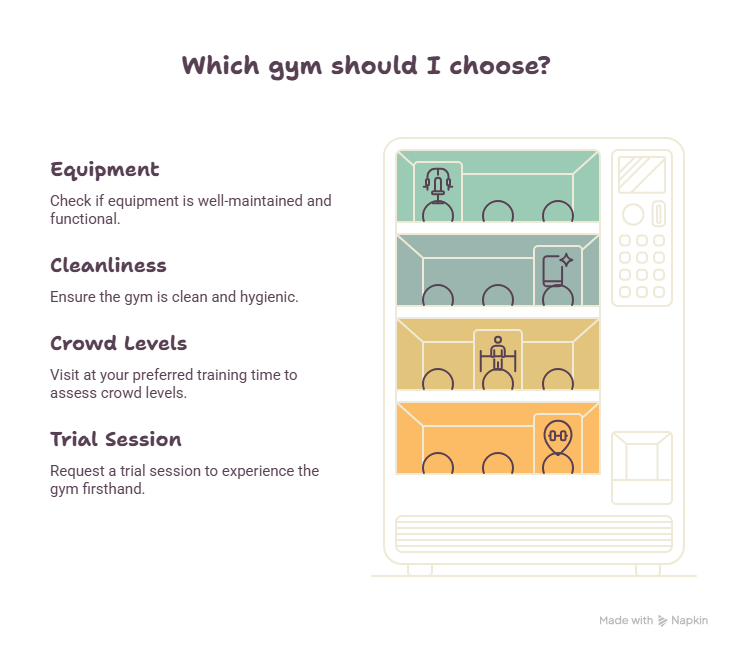
Skip the slick ad. Skip the “50% off, today only” banner too. Go and look at the place. Walk around. Is the equipment cared for, or is half of it marked “out of order”? Go at the hour you’d train, since a gym that’s quiet at noon can be a zoo at 7 p.m. Ask for a trial session. If they refuse, that tells you something.
Things to check:
- Equipment and machines
- Cleanliness
- Changing rooms
- Washrooms
- Ventilation
- Crowd levels
- Trainer availability
- Workout space
- Opening and closing hours
You don’t need a luxury gym. You need one that has what you’ll use and doesn’t make you want to leave.
4. Ask About the Membership Plans
Once you like a place, ask what plans they have. Monthly, quarterly, half-yearly, and annual are the usual ones, and some gyms run student or seasonal offers. Don’t just take the cheapest. Two plans at the same price can include very different things. Ask out loud:
- What is the membership fee?
- Is there a registration fee?
- Are there any additional charges?
- Is a personal trainer included?
- Can I attend group classes?
- Are there any restrictions on timings?
- Can I pause my membership?
- What happens if I want to cancel?
- Is there a joining or renewal fee?
A few minutes of awkward questions now beats a nasty surprise in month three.
5. Choose a Membership That Fits Your Routine
Longer isn’t better by default. New to all this and unsure you’ll like it? Take one month. See how often you go. If a rhythm forms, extend. If you already know you love training, a longer plan can save money. Fine. Just make it your decision, not the result of a very persuasive person at the front desk.
6. Understand What You Get for Your Money
Prices swing wildly. A basic gym gives you machines, weights, cardio equipment and changing rooms. A premium one adds personal training, classes, specialised equipment, showers, and lockers. A higher price doesn’t buy better results. Results come from turning up, training sensibly, eating reasonably and sleeping enough. The reception area has nothing to do with it. Pay for what you’ll use. A steam room you never enter is just money gone.
7. Ask About Personal Training
Beginners rarely know how the machines work or how to build a workout. Everyone starts there. Many gyms have trainers who’ll help new members with the basics, and it’s either included or charged separately. Considering a personal trainer? Ask about their experience, their availability, and what’s in the package. A good one teaches you the movements and how to use equipment safely. A bad one gives you a complicated routine on day one and vanishes. [Add your own experience with a trainer, good or bad.]
8. Complete the Registration Process
Signing up is usually quick. Expect to give your name, contact details and some ID, depending on the gym. Read the terms before paying. Really read them. Cancellation policy, duration, renewal conditions, extra charges. Keep the receipt somewhere you can find it, and if you get a card or a digital account, figure out how it works before your first visit. Boring, yes, but it takes five minutes and can save you a headache.
9. Plan Your First Week
Now the actual work: showing up. Your first week can be easy. Treat it as orientation. Find where everything is, see how the machines work, try a few basic movements, get used to the place. You’ll feel awkward. Everyone does. Almost every regular you see once stood in the middle of the floor wondering which machine to try. And people are watching you far less than you think. Ignore them and do your own thing.
10. Focus on Consistency, Not Motivation
Plenty of beginners wait to feel motivated. Bad plan. Motivation turns up on Monday and is gone by Thursday. A routine doesn’t care how you feel. Choose specific days and times and treat them like appointments. Two hours daily isn’t necessary. A realistic plan you can keep beats an ambitious one you drop after two weeks. On days you really don’t want to go, go anyway, even for a short session. That keeps the habit alive.
Common Mistakes to Avoid When Joining a Gym
A few mistakes come up again and again.
Choosing a Gym Only Because It Is Cheap
Price matters. It just shouldn’t be the only thing. A gym that costs a bit more but is close, clean and well-equipped does more for you than a cheap one you rarely visit.
Buying a Long Membership Immediately
Don’t let a salesperson rush you into a long plan before you know whether the place suits you. Try it first if you can.
Trying to Do Too Much on Day One
You don’t have to touch every machine in the first session. Overdo it and you’ll be too sore to come back for three days. Ease in.
Comparing Yourself With Other Members
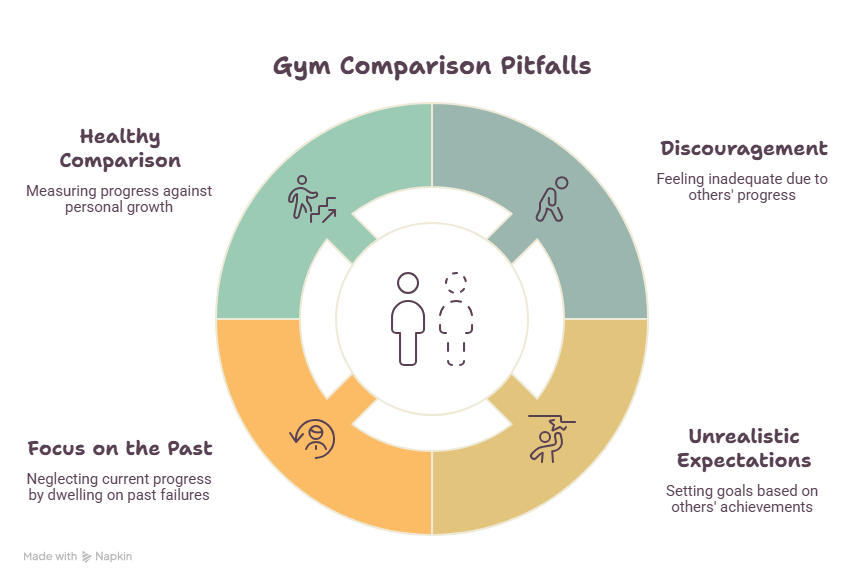
Some people have trained for years, and it’s tempting to measure yourself against them. Your first month next to someone’s fifth year will never look good. Compare yourself with who you were last week.
How Much Does a Gym Membership Cost?
It depends on your city, the location, the facilities, the brand and how long you sign up for. A small local gym can be quite cheap. Premium fitness centres cost far more. [Add real prices from your area if you have them.]
Don’t chase the lowest number. Think about value, and ask yourself:
Will I actually use this gym regularly?
If yes, it’s probably worth it. If it’s inconvenient or uncomfortable, even a cheap membership is wasted.
What Should You Bring to the Gym?
Not much. For most beginners, this covers it:
- Comfortable workout clothes
- Training shoes
- Water bottle
- Small towel
- Gym bag
- Phone or headphones, if you like music while you train
Add more later if you feel the need. And don’t buy expensive gear because someone else has it.
Final Thoughts
Starting a gym membership isn’t really about the contract or the card. It’s about building a routine you can stick with. Take your time finding the right gym. Read the terms. Pick a plan that fits your budget and start slow. The first few workouts will probably feel strange, and that’s okay. Nobody expects you to know everything on day one. Keep showing up, learn as you go, and give it time. Fitness isn’t something you master in a week. You build it one workout at a time.
Frequently Asked Questions
Can I join a gym if I have never worked out before?
Yes. Gyms aren’t only for experienced people, and beginners walk in every day. Go slowly, learn the basics, and ask a trainer when you’re unsure about an exercise.
Should I choose a monthly or yearly gym membership?
Depends on you. If you’re new, a shorter plan lets you find out whether you enjoy it and can go regularly. If you already have a routine, a longer plan may be better value.
What should I do on my first day at the gym?
Get to know the place and the equipment. If a trainer’s around, ask them to show you how the machines work. Keep the workout simple. Don’t try to do everything at once.
Do I need a personal trainer?
Not necessarily. A trainer helps a lot if you’re completely new, but you can also learn the basics over time with good instruction and reliable fitness resources.
How often should a beginner go to the gym?
No single schedule fits everyone. The best one is what you can keep up while still recovering properly. A manageable number of sessions each week usually beats trying to go daily from the start.